Yes, Bikaner’s National Research Centre on Camel can be worth an afternoon even if nobody in your party wants a ride. Go if you are curious about the animals themselves. Why might a family keep one camel for pulling loads and another for milk? The museum gives you a way into that question, and watching the animals from a visitor area can give you more to ask. If what you want is an evening among sand dunes, save the time for a desert outing.
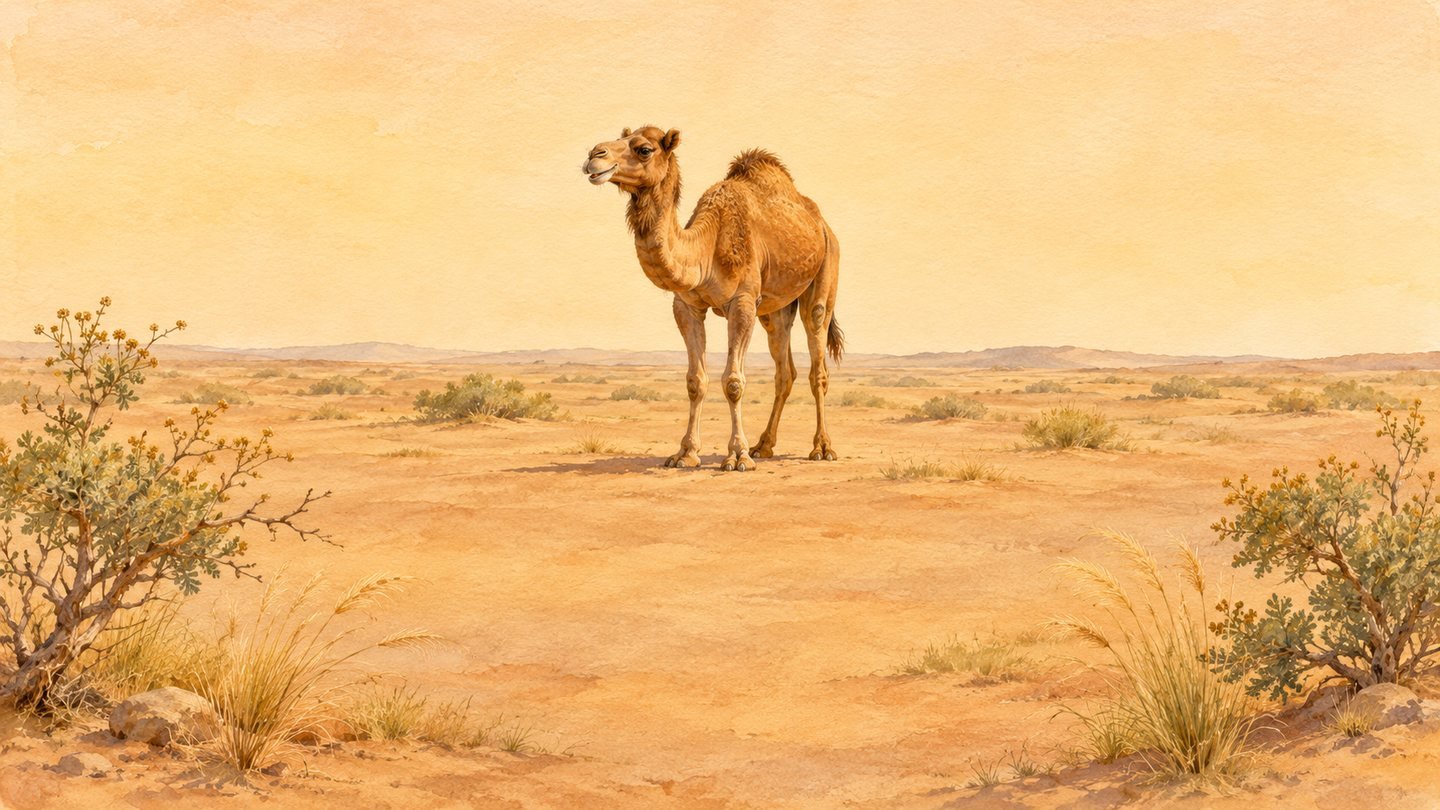
A dromedary on a desert plain. AI illustration for Rajasthan By Car & Driver.
Start with the museum
The centre is an Indian Council of Agricultural Research institution. The ministry’s account of its museum describes displays on camel research and development in the desert ecosystem. Start there while everyone is fresh. One thread worth following is the relationship between an animal’s build and the work its keepers ask it to do. Look for the names of breeds and ask what matters to keepers choosing an animal for milk or for pulling a cart. If a member of staff or a display identifies a breed, take its name with you when you go to look at the animals.
Camel hair offers another way to follow that relationship. Picture a loose tuft, a length of spun yarn and a piece of woven fabric. They represent different kinds of work, from keeping an animal to making something from its fibre. ICAR has documented camel-hair products in its account of Bikaner’s camel festival. In the museum, ask which displays explain how herders use the animals’ products.
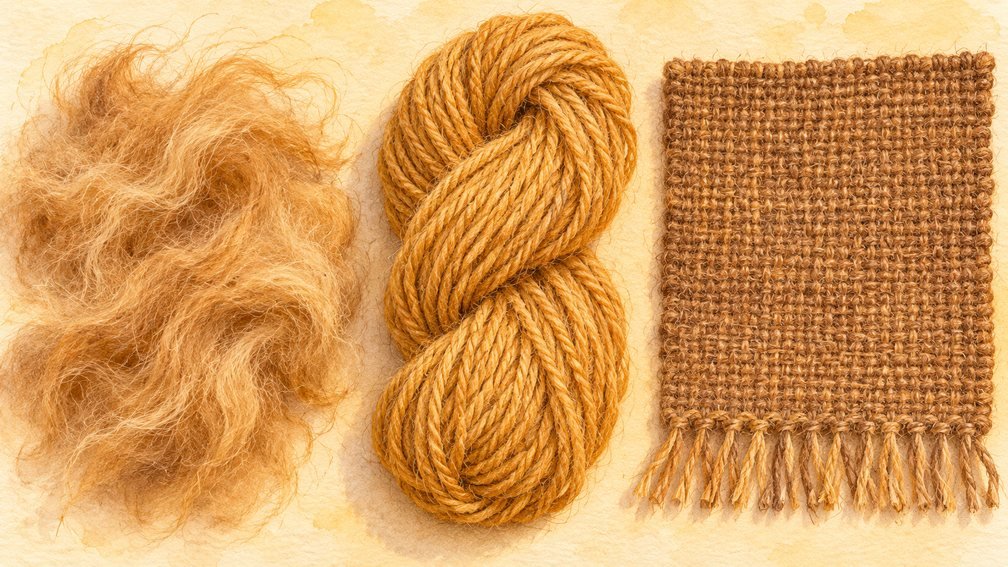
From fibre to fabric. This AI illustration shows the materials as a learning aid.
What you can do on foot
When you enquire, explain that you would like to watch the animals on foot. Ask which viewing area is open and where visitors may stand that afternoon. If several animals are visible, pick one and watch for a little while. Is it resting, browsing or moving with the others? You will learn more from a few minutes of quiet observation than from trying to assign a breed to every animal by sight.
If you are travelling in Rajasthan with children, let each child choose something to look for. A child who enjoys drawing may be quite content sketching the shape of a resting camel. If your child is keen on feeding an animal or watching a herd return, check before promising either. A working research centre follows the animals’ routines, and access for visitors can change.
Give the stop a place in your Bikaner afternoon
Work out the journey from your own starting point and leave time for the drive back. Incredible India’s visitor information lists afternoon opening and closure on Sundays and public holidays. Confirm opening for your date, last admission and access to the museum and visitor areas before setting out.
If you are staying in Bikaner, have lunch and a break in town before your confirmed visit. When arranging a car and driver in Bikaner, give the driver your starting point, the agreed entrance and your next fixed commitment. Leave room on both sides of the visit for the journey and a pause for water. If a long drive brings you into town late, move the visit to another open afternoon or leave it out.
One question before you commit. If the museum were the only part open when you arrived, would the detour still appeal? A yes gives you a sound reason to go. If seeing the animals is the point of the trip, confirm on-foot viewing before you leave town.
Questions to settle before you go
Can one person skip the ride while the others are interested?
Plan the museum visit together, then ask staff about the separate activities available that day. Agree on a meeting point before you split up. One person can give the museum more time without the whole group waiting for them.
Could we visit on the way to Jaisalmer?
Consider it only if your road plan can accommodate an afternoon visit and still leave room for the onward journey. If you want dune scenery or a sunset outdoors, use the Jaisalmer desert camp planning guide to weigh that experience separately. You may prefer to spend the previous afternoon at the centre and set out after breakfast the next day.
What if someone in our group needs a seat or step-free access?
Ask about the whole route from the drop-off to the museum, the current animal-viewing area and the return to the car. Confirm surfaces, steps, seats and shade for the sections you want to visit. If a short museum visit would work on its own, agree that option together before leaving.
Is it worth going for a particular demonstration?
Only if the centre confirms it for your date and that visitors can attend. Research, animal care and public demonstrations are different activities. If your reason for travelling depends on a particular one, check it directly before fixing the drive.
To fit the stop into your wider Rajasthan route, send us your Bikaner arrival date and next overnight stop. Mention who would enjoy the museum, who wants time with the animals in view, and any walking needs. That gives the driver a practical starting point for planning the day.